Monday, 13 May 2013

Galapagos Islands (on a backpacker budget)

An oxymoron? Not necessarily. 
It's true that the Galapagos islands are expensive- there's no way round the $390 return flights and $100 National Park entrance fee. They even add another random $10 tax at the airport- putting you at $500 poorer before even setting foot on the islands. And yet, once there, we were able to see and do absolutely everything we wanted whilst not spending much more than we would in any other South American country: food and accommodation was reasonable and the number of free or relatively cheap activities plentiful. By design, the Galapagos islands are expensive to in order to keep the majority of people out- to limit the impact of mass tourism. The target demographic is middle aged retirees with deep pockets who will visit for a week and dump a ton of cash. The hope is to fuel the local tourist economy enough to deter more destructive economies such as illegal fishing, poaching and farming. While we thought this objective is admirable, we were not rich middle aged retirees, and in all likelihood never would be, so rather than wait until when (or if) we could afford to do a luxury cruise we decided to just go and try and do everything on the cheap. The reasoning was that we would never be closer, it would never be cheaper (the $100 park entrance fee is reputedly set to double in coming years) and the fragile ecosystem that makes up the park is under threat (in 2007 UNESCO listed it as 'endangered') If we waited, it might not be as beautiful as it is now. So, we booked a ticket, and we rocked up, and it really was incredible.

The classic khaki- clad, lens- laden, hat- holding Galapagos tourist
Ecuadorians get a special price for flight tickets to Galapagos- don't try and be a genius here and trick the system. My couchsurfing host in Quito offered to buy our tickets for us, using his Ecuadorian Social Security number, and securing the flights at half the cost they would be for us foreigners, reasoning that once we had bought the tickets what could they do? After deliberating for a while we thought it wouldn't be worth the risk if we got found out at the airport. And thank god we didn't. We met an American girl who had accidentally bought her flight tickets at the Ecuadorian price- she hadn't even been trying to trick the system. Not only did she have to pay the difference in the cost of flights, but also several fees, ending up paying about $100 more than we had. Ouch.

So, most people who visit the Galapagos go on a cruise, which range from about $700 for 4 days to something like $5000 for 8 days, depending on the level of luxury. For us, our budgets couldn't really stretch to that and besides, we couldn't think of much worse than being trapped on a boat with a group of loud, rich and annoying Americans for 8 days (the unfortunately typical demographic of Galapagos tourists). Not to mention the stifling feeling of being told that you were allowed 15 minutes to enjoy one beach, 10 minutes to relax, time for a half hour walk here, 20 minute to snorkel there. It's true you might see a lot more of the different bird life on a cruise, but you can definitely see all of the other major wildlife without forking out. This is where I take issue with Lonely Planet where it implies that the only way to see the islands is through a cruise- from talking to people who had done one we saw just as much, if not more, by doing it independently. And spent hell of a lot less. Although, cruises once you get to the island are alot cheaper than the internet or even Quito, so if the cruise is something you want to do, just book it once at the Galapagos islands. If you fly into Baltra island and get the bus to Santa Cruz island and base yourself in the main town- Puerto Ayora- you can bag last minute cruises for a fraction of the price. One girl we met got herself a cruise for $800 that was originally $3000- she said how smug she felt chilling in the first class hot tub surrounded by the wealthy and knowing that she'd paid a mere fraction that they had!

Walking around, almost every other shop will try to
offer you a last minute cruise, often at incredible prices.
Shopping around for cheap deals! :D
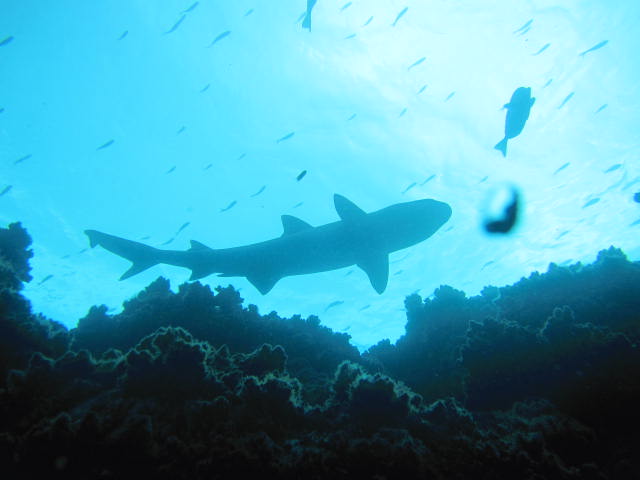
It wasn't just the money that made us not opt for the cruise- we could have found one for very cheap, very easily- but for us, our priority, was the marine life. Both being divers, we wanted to spend as much time in the water, and doing a land based tour meant that we had the flexibility to mix the diving up with some beaches, the highlands  and seeing the rest of the wildlife of the Galapagos  The diving itself was one our biggest spend once we were there- coming in at $380 for three days, 6 dives. But that, compared to the cost of diving in other countries, is not even that extortionate. This is where it helps to shop around, as we found shops charging between $120 for two dives to $175, with no real difference in the quality. But the diving was the best I had ever done. Diving off Floriana island, you often didn't know where to look when your buddy was pointing at a white tipped reef shark inches away, the instructor was calling for us the look at a group of eagle rays swimming (or flying??) past and you yourself were caught in a staring contest with a green turtle. That's not to mention the numerous sealions swimming all around you, quite literally the puppies of the sea as they dart around, nipping at your fins, even trying to nip at my alternate air source (a little air boost??) And then there was thousands of types of fish, moray eels, stone fish, huge sun fish, more sharks, bumphead parrot fish and always turtles and rays. Twice on the way back we saw bottlenose dolphins as well. These pictures can only capture the wonder of it in part, video to follow when my laptop stops being stupid:

Huge sunfish
Galapagos shark
So many sealions!
Flock of devil rays!
Accommodation wise: we only spent $122 during the 10 days we were there, which is... what.... less than a week's rent at University in England?? We could always find a room for $10 a night each, but often went one up on the luxury scale and spent $12- $15 a night each. On Cristobal island we got off the ferry and a guy offered us a whole apartment for $15 a night each, complete with kitchen, hot water, a TV and air conditioning. The kitchen was a huge thing for us as we had trouble finding a room that allowed us to use a kitchen, and we wanted to keep costs down by cooking for ourselves. Our entire food spending came to $70 for the whole 10 days, not including another $15 which we used for snacks, bottles of coke, and ice cream. After a couple of days of spending stupid amounts for food in restaurants, we discovered the wonder of the 'Almuerzo' and 'Merienda' (lunch and dinner set meals) that most restaurants and cafes do a couple of blocks away from the main tourist streets. This is where the locals eat, and for only $3 you get a soup, a main course and a juice. You usually get a choice of some kind of meat or fish, and pretty much everywhere we went also was happy enough to make me something vegetarian instead (usually egg related...) This was an absolute lifesaver in terms of money: some tourist restaurants would try to charge about $10 for a sandwich!

Seeing Giant Tortoises in the wild!
Tours: there are many many tour agencies that offer tours of the island, and to other islands. Our advise is to shop around. From Santa Cruz, we found places advertising a 3 day 2 night tour to Isabella island for $200.We then walked around the corner and got exactly the same tour for $140 (a little Spanish does help here). During this tour, we got 2 nights in a truly beautiful hotel, all our meals, a trip to see flamingos, another to see the penguins, blue footed boobies and marine iguanas, a snorkelling tour with some sealions and a guided walk up the volcano on the island. Other tours we arranged ourselves by just hiring a taxi driver- agencies would charge $50 each to do a tour of the highlands of the island, however if there's two of more of you you can hire a taxi for $60 (so $30 each) to take you to exactly the same places. So on these tours we went to Giant Tortoise Sanctuaries  saw Lava tunnels, and on Cristobal island a 300 year old treehouse, a lagoon, and a white sand beach. Our total cost for tours came to $186.50.


Beautiful beaches littered with sleeping sealions

Galapagos penguin- the only penguin in the world to live
higher than the equator!
Flamingos!


And then there's the free stuff, which is numerous. The Charles Darwin research centre is free (the late home of Lonesome George, the very last of his species of giant tortoise). You can also go to many beautiful beaches which are just a short walk away, on Cristobal island we loved Playa Mann which is beautiful white beach with clear water, and several sealions often play around you while you're swimming. There are always good snorkeling spots to walk to, in fact right next to the port on Isabella island we found an amazing spot which had several turtles, penguins, marine iguanas and sealions keeping us company. (That was the other amazing thing there, we spent almost the whole morning there and had it completely to ourselves).

Playa Mann beach, 5 minutes walking from town
Turtle at our free (and deserted) snorkelling spot
Sealions chilling at a beautiful (free) beach
Sunset at another free beach a short walk away!

So, all in all, we saw an incredible amount of wildlife, some expected, most a happy surprise. We hit every single one of the main animals for which the Galapagos is famous for: the Giant Tortoise, the Marine Iguana, the Darwin Finch, the Blue Footed Boobies, the Frigate bird, as well as others which whilst not endemic (unique to Galapagos) are equally as amazing, the sealions, the hammerhead sharks, the rays and turtles, penguins and flamingos. It was the trip of the lifetime.

Total spending: $1300 (£846) for the 10 days
If you don't include the scuba diving: $920 (£599)
And you can do it even cheaper if you never go out for a meal/ don't buy luxuries like ice cream and coke.....

If I compare those 10 days to what I would spend on the average week of skiing in Europe, it's almost equal (once you add up the ski pass, equipment hire, hotel, and then spending money on the slopes or in the apres ski bars). My last university ski trip I think I spent at least that!

So, this blog post is really just to dispell the strerotypes that the Galapagos islands is a rich man's payground, we wanted to prove that you, the budget backpacker, could make it there too, and still see everything!! :D GO! :D

Friday, 19 April 2013

Colombia: "Dangerous? The only danger is wanting to stay...."


If there's one country that continually falls victim to rash stereotypes that were valid 20 years ago, it's Colombia. Whilst those who have never traveled there warn of the dangers of getting kidnapped, robbed or murdered, those who have been rave about the stunning beaches, the lush jungle, the clean and safe cities and the friendliness of the people. Perhaps it once was one of the most dangerous countries in the world but, newsflash, Pablo Escobar is dead, the guerrillas and paramilitaries all but non- existent, and the tourist industry is growing with a vengeance.

Colombian advertising campaign "the only risk is wanting to stay"

Lost City Trek

A big reason for wanting to come to Colombia was to tick off number 9 of Lonely Planet's top 10 things to do in South America- the Lost City Trek. My first ever couchsurfing host, way back in September in Malmo, Sweden, said it was the best thing she had done during her travels in South America. So, after mentioning it to my brother, he packed a bag and some walking boots and met me for a Colombian adventure to take in Caribbean beaches, jungle, mountains and cities.

Taganaga beach at sunset
The best place to base yourself for the Lost City Trek is in Sarta Marta, or better still, the small town just over the hills called Taganga which is like Gringo Mecca. After the novelty of being one of very few white people in Venezuela it was kind of a shock to arrive in Taganaga and see so many Europeans, Americans, Australians. Although I did feel a little bit like a rock star when people asked me where I'd been before and I said Venezuela ("wow that's SO COOL") : I didn't meet a single person who had been from or was going to Venezuela while I was in Colombia (apart from a woman who actually was Venezuelan, but even she wasn't going back- her family had all fled to Colombia to escape the regime.)

After a couple of days of sunning ourselves we set off for the stiff 5 day hike to the Lost City- and this was no casual stroll in the Lake District. Scrambling up almost vertical muddy jungle trails, wading through rivers, slapping at mosquitoes, we had sweat pouring off us in the muggy heat.
But it was absolutely stunning:

  One of the natural swimming pools
Our view when we woke up in the morning
Jungle paths
Sleeping in hammocks

Each night we slept in hammocks, and awoke with our guide offering us a coco or coffee, and then it was off again and onwards and upwards and downwards and upwards again. Some people really struggled- one Australian woman in our group who had hiked in the Himalayas some years ago almost gave up at one point. Another guy made the rooky error of wearing walking boots he hadn't used before- the bloody and sore combination of mosquito bites and blisters on his foot was enough to turn the stomach (he struggled on through the rest of the hike in flip flops!). We struck lucky with a really fun and interesting group though, and it made everything a lot easier.

Hilariously, the British Foreign Office warns British nationals not to do the Lost City Trek. Why? Because 10 years ago a group of tourists were kidnapped and held for a few months. Never mind the fact that Colombia have now brought the military in to guard the trail, and that the guerrillas have been wiped from the region. I have a feeling the British Foreign Office will only be happy if everyone in Britian stays tucked up in bed in their houses. (It also warns people not to go to Japan..... because of Fukushima and because China are a little bit unhappy with them at the moment. Oh ok. Because Japan is such a notoriously dangerous country....)

Colombian military looking out for us!

Anyway, we had been warned that the actual Lost City ruins weren't so impressive, and people were often disappointed when they got there, so we should really enjoy the journey rather than the destination.
I couldn't disagree more.
Hiking through the jungle for 3 days, then climbing 2000 moss covered steps and finally emerging above the trees in a mystically beautiful city that is only accessible by the trail you've just taken.... was incredible. Built by the Indigenous people 100s of years ago it was only discovered by gold hunters in the 1970s, and I felt incredibly privileged to walk past descendants of the same tribe going about their daily life, on my way to visit a city that people didn't know existed until a few decades ago.


Local Indiginous Children
Finally reaching the Lost City!

After the trek we collapsed, exhausted, back into Taganga where we stayed for far too long on the beach having massages and drinking cocktails and going out salsa dancing with all the crazy Colombians who had flocked to the coast for Semana Santa, the Easter weekend. Eventually though we thought we should probably move on, so we headed to....

Cartagena

Cartagena: the beautiful colonial town where the heat is blistering and the cold showers warm.
Cartagena has one of the most beautiful old towns I have ever seen, it's like you've stepped back into a European city, you could be in Spain or Italy and even then it would be beautiful. Horse drawn carriages weave round the narrow cobbled streets, and masses of flowers overhang the balconies. Set as it is by the Caribbean, though, it was ridiculously hot. A mere hour or two exploring the old town left me and my brother collapsing into a cafe to get a CocoLimonade (the most refreshingly beautiful drink I've ever had!) We quickly made the classic European error of trying to insist on sitting outside “Really? You want to sit outside?” “Well of course, it's a beautiful warm summer day! Why isn't there anybody else out here on this beautiful balcony?” After sitting for 5 minutes, sweat running down our faces, locals sniggering, we admitted defeat and retreated into the air conditioning. The waiters had probably had a bet on on how long we'd last outside.


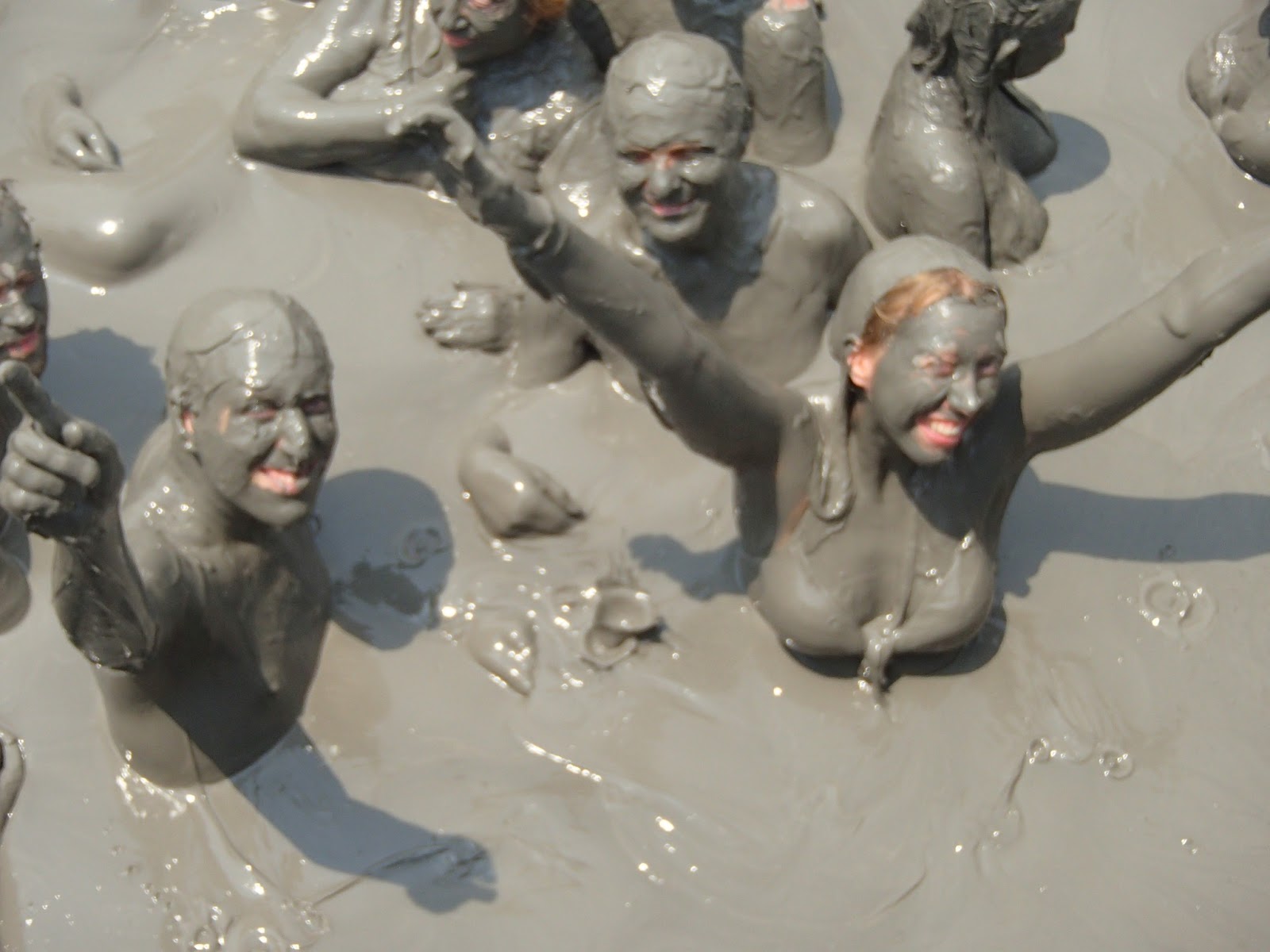
Asides from the old town, there's not an awful lot else to do in the Cartagena. The real attractions lie just outside. We took a day trip to a Mud Volcano, which is exactly as it sounds, a volcano made of mud. It's more of a mound than a volcano, but what is really cool is that you can climb up the stairs they've made up the side of it and go into the crater- and then float on a column of mud that stretches a mile and a half down into the Earth. It was certainly one of the most unusual experiences of my life, with a local woman massaging mud into my scalp and the denseness of the mud making it feel like I was bopping around on a mound of giant melted marshamallows.....


Me and Nick celebrating have mud.... everywhere..!

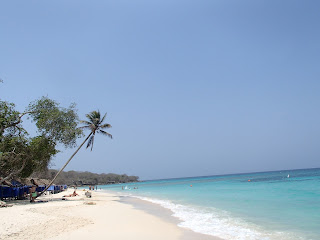
The second highlight of Cartagena, which is actually outisde of Cartagena, is Playa Blanca. This is quite possibly the most beautiful beach I have ever been to in my life. It has the classically Caribbean warm, clear and ridiculously turquoise waters, endless white sand, and even a few palm trees to complete the look. It's a beach that's so damn beautiful that you end up taking identical pictures of the same scene, because you can't quite believe how beautiful it is.....


There are lots of tourists boats that take people there for the day, but these cost about $35, so we decided to elect for the cheapie backpacker option of taking public transport. The advantage of this was that we could also stay the night there, and get the beach almost entirely to ourselves once the droves of tourists went home on the boats at about 4pm and didn't come again until 10am.

So we packed our bags and headed to the the centre of the town where we could catch a bus, looking like complete gringos with our sunglasses and beach bags and towels over our shoulders trying to figure out which bus was the correct one. A Colombian lady took us under her wing and ended up running after our bus until it stopped to let us on. We clambered aboard and travelled for about an hour until we were dumped in the middle of some little village which couldn't be more different to the centre of the Cartagena. This was real poverty, this was where the people who could barely scrape a roof to cover the homes lived. We walked for a couple of blocks through the village until we reached a canal, where we were told we could get a boat across. This was all fairly painless, and I arranged with the guy who was in the canoe with us that he and his friend would drive us on their motorbikes at the other end to the beach. I tried not to think what my mother would say if she could see me clambering up on a motorbike behind a strange Colombian guy and speeding down country roads without a helmet..... but we got there not only in one piece, but only 5 minutes behind the Irish girls at our hostel who had taken the tourist boat (and they left the hostel before us), and of course we were about $30 better off than them. Score.

Motorbikes, step 3 of Playa Blanca
by public transport!

Our first step (after gaping at the beauty of the beach) was to find somewhere to sleep. Wandering down we stumbled across a local family who have a small restaurant and some hammocks for rent for about $2. Sorted.

Our day was spent in a continuous cycle of swimming, snorkelling, sunbathing and reading. And then, eventually, the tourist boats left and we got the beautiful sunset all to ourselves:


And THEN the true highlight. Night swimming. With phosphorescent plankton. After sunset, but before the moon rises, it's dark enough that if you enter the water and swish around a bit, the water will glow green where you've swished! This had me giggling like a little girl for at least half an hour....

After a yummy dinner, a few bears, and a CocoLoco (a coconut filled with various types of spirit) we retreated to our hammocks, with nothing but the sound of the soft Carribean waves and the sigh of the palm trees to lull us to sleep....

And then we had the sunrise, and at least 4 hours to enjoy the beach to ourselves before the tourists came again:


At which point we made our way back, and got ready to get on our flight for the final section of our adventure, MEDELLIN!

Medellin

So, I've been pretty lucky with couchsurfing so far. Rooftop pools in Miami. Personal saunas in Finland. A string of incredibly generous hosts. But the place we landed in Medellin..... it was unbelievable. After sending off a fair few couch requests in Cartagena and Medellin and receiving nothing back (not even an "I'm sorry, no room") I was feeling pretty pessimistic about couchsurfing in South America. Which was really annoying as I was so eager to show my brother how great it was. But then out of the blue I got a message from a guy saying that he ran the International House in Medellin, and as a group of students had just left, he could let us surf in the apartment. We were kind of waiting for the catch, was it actually couchsurfing or did he want us to pay something? What kind of apartment was this? Where was it?

There was no catch. He was purely and simply a really generous guy, and we had an entire apartment almost entirely to ourselves, including leather sofas, cable tv, a kitchen, 4 bedrooms, 4 bathrooms and access to the rooftop spa and terrace. My two Colombian friends (who I worked with in Finland) lived in the same area, which was near to the university and full of students. We spent evenings hanging out on the rooftop with our host's friends, getting to know people, cooking dinners and having beers. It was perfect.

Medellin at dusk, from our rooftop terrace

Former home and haunt of drug lord Pablo Escobar, Medellin was once the most murderous capital of the world. At Escobar's pinnacle, he was the 7th most richest man in the world, and apparently he couldn't actually deal with all the money so they'd hide millions of dollars in his desk and give it to the poor. He also got rid of his money by paying anyone $1000 to kill a cop....  He's still actually considered a hero by many of the residents in Medellin due to his generosity to the poor. Anywho, ever since he got gunned down in 1994, Medellin has slowly opened up again, and it is now an incredible city. You would never think you were in South America, let alone Colombia. Clean, high- tech, it boasts a metro system and the 'Most Innovative City in the World' title. It was the first city to build a cable car to connect the poorer areas on the hillside with the richer areas in the centre. What is interesting about cities such as Medellin that are built in the mountains is that the further up the mountain you go, the poorer the people are. If you compare that to places like Beverly Hills, the higher up the mountain you are, the richer you are as you have the best views!

Metro system in Medellin
With my Colombian friendd!

One of many of the city's initatives to built public spaces. areas where
children (and adults!) can splash around in public parks!

Metrcar system to Medellin

I was incredibly lucky to have my friends live there to act as local guides, and we spent some awesome days exploring the city and I learnt from them what it was like to live and grow up in a city that had changed so incredibly during the last 20 years, well within their lifetime.We also visited a little town called Guatape nearby which is full of beautiful little coloured houses, and we climbed a huge rock to look over the landscape. I also joined the Spanish Conversation classes at the local university, which were free, so I could practice my Spanish and meet up with some of the local students, really good fun. But my Spanish is still pretty crap.

Climbing the huge rock near Medellin
Reached the top!


But like all good things, they eventually come to an end. My brother had to fly back to England, and I was off to Quito the following day. And what to do with my spare day? I'd been on the go pretty much non- stop for about 4 months so I gave myself a day to chill out in my beautiful apartment and take advantage of the super fast internet to catch up on such important things as 'Greys Anatomy' and 'Glee'...... Because travelling really can be exhausting sometimes!

Hasta luego amigos :)


Sunday, 31 March 2013

Border Cross- Mérida, Venezuela to Santa Marta, Colombia by bus

The death of Chavez, for many Venezuelans, was not just the death of their political leader. It was the death of a saviour, a saint, a goddamn God unto himself. Every square in every city was made into a shrine in his honour. Every shop, bar or club that served alcohol was instructed to close for a mourning period of 12 days as a sign of a respect. Loud music was not permitted. Parties were not permitted. The Police were watching. 


Chavez polarised the country; those who worshipped him, and those who hated him. The lists of those who voted for which party became open information. If you voted for the opposition, suddenly you found that nobody was willing to offer you work. Your child's scholarship was mysteriously revoked. Opportunities dissolved. And now suddenly that man was dead (or at the least, was now declared as dead. There are many who claim that he was brain-dead since December, and it was only now that they unhooked the machines and announced it, giving the party enough time to prepare for the resulting elections.) 
Whilst there were no reports of turmoil or disruptions, the country was strained. It was probably not the best time for a young, blonde, white girl to head off by herself on the 24 hour journey across the border to Colombia. Especially as the Vice President (now leader of the party) claimed that the Americans were the cause of Chavez's cancer:  a merciless, intentional and planned enemy attack. No, I'm not quite sure how that works either.

But hey, there you had me, after 11 weeks of a relatively sheltered existence of Spanish lessons and travelling, I was by myself again. And more than slightly nervous. But as other blogs on the internet helped me in planning my journey here it is for you: how to get from Venezuela to the Caribbean coast of Colombia by bus.

Merida to Maracaibo

The first leg of the journey is the 10 hour overnight bus journey from Merida to Maracaibo. Tickets need to be bought on the day of travel, in the morning. I headed to the bus terminal at about 8.30am to get my ticket, and went to kiosk for Techira Merida, which I was told had the best buses. 115bfs (about $5) got me a ticket for the bus which left at 9.30pm. I succeeded in speaking to the man behind the desk in Spanish and not only did he understand me, but I understood him. It was a magic moment.

12 hours later I was waiting in the bus terminal, after wandering around in slight confusion and having to go back to pay the 4bf departure tax. I was Miss Paranoid, clutching onto my various bags, and very aware of the fact that I was the only white person in the entire place. The bus driver came over whilst I was waiting and began to chat to me, sympathetic to my broken spanish. It became time to load the bags into the bus and he said something I didn't understand, shook his head and took my bag from me. Panicked, I rushed after him, remembering guide books warning me not to let go of my bag, that if you got help from anyone at the bus terminal they would expect to be tipped..... And then he smiled and handed me my bus ticket and the label for my bag, gesturing again in Spanish. It wasn't until I boarded the bus that it clicked. He had been trying to say that he would take my bag and do my ticket first to ensure that I would have the best seat on the double decker bus- top and front- with a stunning view out the windows. I felt acutely embarrassed for my rudeness towards him.

Feeling slightly mollified I settled into my seat and got out my sleeping bag- the bus was luxury with wide comfortable seats that fully reclined- but like all South American buses they were overzealous with the air conditioning. Getting cosy, an elderly man came to sit in the seat next to me, and we had a pleasant conversation in Span-glish about what I was doing here and where he was from. He explained he was ill and was going to see his doctor in Maracaibo, and apologised for the fact that he was coughing. The coughing would have been fine, but unfortunately he also smelt. And snored. Loudly. It was a long long journey, especially considering the death of my iPod on the slopes of Roraima.

However, I felt completely and utterly safe. The bus stopped a couple of times so we could go and buy things, and several people came up to me and asked what on earth I was doing here. I had a drink bought, some snacks offered, and the people seemed genuinely delighted when I told them the places I had been in Venezuela, and how beautiful I thought it was.

Maracaibo- Maicao

Several sleepless hours later I arrived into the bus station at Maracaibo. There is a bus that goes directly from there to Santa Marta, but the Merida bus arrives after that one leaves. And in any case, it departs from a part of the town that you really don't want to be in at 5am.

The other option is to take a por puesto from Maraciabo over the border to Maicao, in Colombia. These are big, old fashioned American style taxis that leave whenever they can't squeeze any more people into them. Descending bleary eyed from the bus I was bombarded by people shouting different locations at me, and after locating my bag I wandered to the other side of the terminal until I heard somebody shouting Maicou! Colombia! For 250bfs ($14) I found myself jammed in the back of a taxi between a middle aged Colombian lady, and a mother and baby (who in true South American style promptly began breast feeding). Squeezed into the front seat was a young Venezuelan guy, and another middle aged lady.
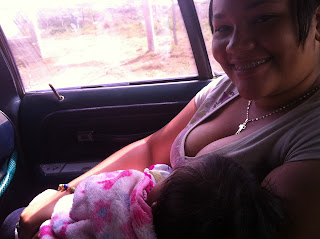
Mother and baby next to me

The Colombian lady next to me immediately began to chat to me in Spanish, to offer me snacks, and to make sure I was okay. I told her that I was heading to Santa Marta, and needed to change the rest of my Venezuelan bolivars to Colombian pesos at some point. She told me that she would "be my mother" and not leave me until she saw me safely on the bus, and that she knew somewhere safe to change my money- that you shouldn't trust the numerous guys who offer money changing on the border.

The conversation in the taxi swiftly turned to the troubles in Venezuela, with my new Colombian mother frequently patting my knee and telling me not to worry, you will be in Colombia soon and out of here. She travels over the border frequently to get materials for clothes, as it is cheaper in Venezuela, and she also takes US dollars over to sell. Everybody began to exclaim when I told how in the 3 months since I had been there, inflation had risen by almost 150%. The official rate for the bolivar against the dollar rose from 4 to 6, whilst the black market rate jumped from 10 to 25. Much head shaking and rapid spanish ensued, and the conversation then turned to Chavez, discussions that I probably would have struggled to follow even in English.

Along the road, we were stopped at at least 5 military checkpoints where they checked over our passports, gave a cursory look in the boot of car, and waved us on. I explained to the woman that I needed to make sure I got my exit stamp in my passport to Venezuela, and she told me it was no problem. Which, thanks to her, it wasn't. Without her, it would have been a nightmare.

Rapid Spanish and the lady tells me I need to get out 25bfs ($1.50). Seeing that the other people who need a stamp are doing the same, I do so. The lady then grabs my passport and money and hands it to the driver, who sprints off in the direction of a kiosk at the side of the road. Jammed into the middle seat, I have no option but to watch my passport disappear out of sight, my mind jumping to scenarios where I have to battle my way to the British Embassy in Caracas to get a new one.
Donde estas mi passporte!!!!
It luckily returns within a few minutes, and is handed to me by the lady, who gives me a bemused look. It doesn't have the exit stamp, but a slip which says that I have paid the departure tax. Well ok. That's step one.

Step two, we arrive at a building in the middle of nowhere with a long line of people, stretching back a long way. The queue to get the stamp would take at least 3 hours, and the sun was beating down on us. My Colombian mother sighs, and disappears round the back of the building for a few minutes, returning with a man in a uniform. She tells me and the other lady to get out 50bfs ($3) and to give it, along with my passport to the man. All the time she is looking round furtively to check that nobody is watching. Reluctant to let my passport out of my sight again, I eventually hand it over when I see that she and the other lady are also doing so. Our passports are whisked out of sight, only to return 5 minutes later and handed back to the lady behind the cover of a large tree. The exit stamp is inside, and we make our way back, stepping round the lines of hot, sweaty and impatient people. My Spanish teacher always joked that you could get anything done for 50bfs in Venezuela. I now know that to be true.

We walked for about 3 minutes over the border to Colombia, with the lady grinning and shouting to me exuberantly that I was safe now, that I would see how everything was better even just two meters over the border sign. And to be honest, it was. I strolled into the Colombian immigration building to get my stamp for 90 days in Colombia, and the man behind the desk grinned and clutched his heart in fake surprise at seeing a white face (he told me). He chatted and smiled and gave me the stamp without trouble, and we waited outside for our taxi to meet us. While waiting, the money changers came and stood around me, all wanting to say something in English (unfortunately primarily restricted to "baby!" "beautiful!" "hello!")

What was more interesting was the trucks that began to pass us from Colombia, into Venezuela. They were full of cows. A line of cow trucks, almost as far as the eye could see, passing over the border. I wish I could have got a picture but my camera was dead and my iphone hidden. Why these trucks? Chavez's socialistic regime resulted in the successful farms in the centre of the country being repossessed by government officers and given to other people, who knew nothing about farming. They began to fail. But, hey, that doesn't matter, the government said. Who needs to produce stuff when you have oil? Almost everything is now imported, including milk and meat from Colombia. Hence the lines and lines of cow trucks. My Colombian mother again shook her head and muttered something about how happy she was to be back over the border. We climbed back into our taxi and arrived in Maicao.

Maicao- Santa Marta

Maicao bus terminal in a chaos of people trying to sell you things, take your bags, get you in a taxi. The Colombian lady grasped me by the elbow, and told the man who was trying to sell me a ticket to Santa Marta to fuck off when she found out that he worked for another bus company. No, she said, you must get your ticket from Bus Brassilia, they are the best. She first took me a exchange bureau where I changed my money for an excellent rate. She then helped me to buy my bus ticket (27000 pesos, $15. Damn Colombian bus prices!) and told the driver in strict Spanish to let me off at Santa Marta and put me in a safe taxi to my hostel in Taganaga. She then turned to me, kissed me on both cheeks and wished me a safe journey. Completely grateful and completely clueless on how to show my gratitude I offered her some chocolate chip cookies. I think she appreciated the thought.

Settled on the bus, a man came on board which a huge gun, smiled, and took a picture of each and every person seated on the bus. Bizarre.

4 rather uneventful hours later I found myself in Santa Marta, and the driver, good to his word, got me into a taxi to Taganaga. Exhausted, I collapsed into a hammock at my hostel and awaited the arrival of my brother from England.

Total cost of travel: $37.
Alternative option, flight:  $600. (high season, ugh).
Money saved: $563
Experience gained: too much to quantify
Faith in humanity: Strengthened once again. Kindness is still alive in the world!

One adventure was over. The next were to come! Hasta luego.

Sunset at Taganga Beach


Thursday, 21 February 2013

The Land of Grace

The Repúlica Bolivariana de Venezuela. Wrapped up in petrol-politics, socialist agendas and shocking inflation, only 1% of travellers to South America come here. Peru is romanticised for Maccu Piccu, Brazil for Carnival; Venezuela's international reputation swirls around oil, the highest murder rate in the world, and the aggressive political style of Chávez (a socialist saint or a brainwashing oil baron, depending on whom you ask).

But behind the political hyperbole is a country of stunning natural beauty; relatively unspoilt and completely uncommercialised. Our base camp is in the north of the country, on the longest stretch of Caribbean coastline in the world. We've camped in Caripe in the North; the 'garden of Venezuela' hiking to stunning waterfalls in the mountains, exploring the longest cave in South America, and visiting cocoa and coffee plantations. After a brief 2 day changeover at the camp, we travelled into the East, to kayak through the Orinoco Delta. This area of Venezuela has only opened to tourists in the last 20 years, and has been home to the Waroe Indians ('water people') for over 30,000 years. There are several tour companies that run boat trips around the delta, but we are the only group to travel as the Waroes do, by kayak and canoe. This meant that they could show us waterways narrow and shallow enough only for us, and we could glide along silently watching for parrots, monkeys and river dolphins.

Orinoco Delta

Susnet as we glide towards our third camp in the Delta


´Our´ beach


A week ago I and a 3 others travelled to the South, where lies the highest waterfall in the world; Salto Angel. You can get there only from Canaima, a vaillage inhabited by the Pemon Indians and accessed only by foot, or small planes. There are no cars in the village, and it is surronded by dense jungle. Apart from when you walk to the beach, which looks like the classic white sand and gentle waves you imagine when you think of the Caribbean. Except we are several thousand miles inland. The white sand borders a lake, which is filled by a vast waterfall. Behind the waterfall is another wonder of the South of Venezeuala; tepuis, flat topped mountains. On Sunday we are returning to this area, ´La Gran Sabanna´ to undertake the 6 day hike to the top of Roraima, the oldest mountain on planet earth. The summit was unexplored until a hundred or so years ago when explorars finally made their way to the top- there they found a lost ecosystem completely different and completely unchanged by the natural events at sea level. This mountain was the inspiration for Sir Arthur Conan Doyle´s ´The Lost World´, where dinosaurs roamed on the top of these table top mountains. I can´t wait.

Flat topped mountain

Canaima waterfall


Soon I will finally travel West, to get my first peak of the Andes in the adventure sports capital Mérida, and to take the short hop over to Columbia, one step further in my South American adventure.

Venezuela will undoubtably be the country in which I will have spend the longest time (almost 3 months) in this continent, and my impressions are a strange amalgamation of emotions.
Awe, pity, confusion, anger, sympathy, envy.

I have never before travelled to a country in which there operates at least three exchange rates; the official one (regulated by the government at a obscenely expensive rate) the official black market rate (discovered by accessing a secret website unlocked by certain keywords) and the rate which you can realistically expect to get from shopkeepers or people on the street.
Why does there exist a black market? Simple. Venezuelans are unable to keep their savings in banks, as the rate of inflation is such that it becomes worthless there almost immediately. Instead, to keep their money secure, they must purchase dollars or real estate. However, a recent law has passed decreeing each citizin must own only one house. Moreover, a Venezuelan resident is only entitled to change $300 through the government, once a year. No other countries will accept the Venezuelan bolivar. Imagine wanting to take a holiday to Europe. How far will $300 take you? Nowhere.

If I go into town by myself, I can guarantee that I will be the only white person, and will walk to a chorus of catcalls, shouts of 'gringa!', and car horns. And then those same people will lean forward with a keen interest and ask me if I like their country, why I am here, what it is like in England. What is regarded at home as obscenity is meant here as a genuine gesture of admiration. Gringa is not meant as derogatory, instead to insult is to show affection. Our Spanish teacher regularly greets his friend as "¡Gordo!" (fat man!), he gets a "¡hola jirafe!" (Hey giraffe!) in return.

There are regular shortages of things here, from the luxuries such a sugar to the banal such as toilet paper. The government ensures that these shortages remain in places such as the coast rather than Caracas; cities can rebel, villages cannot.

Why are there shortages? Venezuela is a rich country. It has gold, it has minerals, and it has a fuck load of oil. It has more than enough to sustain its people, and more besides. Unfortuately, with a load of oil there comes a load of corruption. During a trip into town, I will see a dozen or so posters and graffitis informing me that this bridge was built by Chavez, that I should vote for Chavez, that the way forward is with Chavez.

Vamos con Chavez, ´We go with Chavez´


Chavez is the socialist president who has been in power here for 14 years. In that time the country has declined into the entity that the international recognises it as, dangerous, corrupt, poor. And yet over 50% of the people here think that he is a saint. A clever leader, he gives people the things they need in the shrotterm, and it tricks them into thinking he is doing something for them, when in fact long term projects would be benefital. This is a complicated point and I am running out of time on the internet cafe, but it is interesting.
Read about it.